
New Zealand is one of the biggest producers of electronic waste per person on the planet, and here’s the part that stings: most of it isn’t broken. Perfectly good laptops and computers are thrown out every day, while the environmental cost of building their replacements quietly stacks up. This is the case for a smarter approach, keeping good machines in use instead of sending them to landfill and manufacturing brand-new ones to take their place. Here are the real numbers, and where a renewed computer fits in.
What e-waste is, and why New Zealand’s numbers stand out
E-waste is any electronic gear that gets thrown away: laptops, phones, TVs, cables, the lot. The problem isn’t that we own it, it’s how fast we bin it. New Zealand produces roughly 101,000 tonnes of e-waste a year, which works out to about 19.6 kg for every person. The global average is closer to 7.8 kg a head, so we’re throwing out well over double the world average each. Worldwide the picture is the same, only bigger: humans discarded 62 million tonnes of electronics in a single year, and less than a quarter of it was properly recycled.
Where all that e-waste ends up
Here’s the uncomfortable part. New Zealand’s officially documented collection rate for recycling electronics sits at 0 percent. Some voluntary recycling does happen through council facilities and drop-off points, but almost none of it is formally captured, because we have no national e-waste law, no mandatory producer responsibility, and no collection or recycling target. E-products were declared a priority for regulated product stewardship back in 2020 and a scheme is being developed, but until it’s in force, most of our old electronics still head for landfill.
Is buying a refurbished laptop better for the environment?
Yes, and by a wide margin. Most of a laptop’s lifetime carbon footprint is created when it’s built, not when it’s used. Independent life-cycle studies from Dell and Apple both put manufacturing at roughly 76 to 81 percent of a laptop’s total emissions. Buying a machine that already exists skips almost all of that, which is a bigger win than recycling could ever be.
The hidden footprint of a brand-new laptop
Building one new laptop means mining metals, refining plastics, fabricating chips, and shipping the finished machine halfway around the world. Add it up and manufacturing a single laptop generates in the region of 200 kg of CO2e. Because that’s around 80 percent of the machine’s entire lifetime footprint, the carbon is effectively spent before you’ve even switched it on for the first time.
How refurbishing changes the maths
A renewed laptop is already built. Reusing it avoids re-incurring that manufacturing footprint almost entirely, roughly 150 to 250 kg of CO2e saved for every machine reused instead of replaced. Recycling, by contrast, recovers only a fraction of the materials and still burns energy doing it. Keeping a working laptop in use is simply the highest-impact choice available.
Why so many good laptops become e-waste
Most laptops don’t die. They get replaced. A huge share of business machines come off a three-year corporate lease working perfectly, get wiped, and are then landfilled or shredded because reselling them is somebody else’s problem. That’s the quiet scandal behind the e-waste numbers: a mountain of waste that didn’t have to happen. These are business-grade machines, built to a higher standard than most cheap new laptops, and renewed properly they’ll often outlast them. This is exactly the waste we exist to stop. Rather than let a good machine slide into e-waste, we step in earlier and give it a second working life.

A lot of these come off corporate leases still working perfectly, then get thrown out anyway.
Recycling a laptop recovers a little material. Reusing one avoids building a whole new machine.
New versus refurbished: the real cost
| The maths | Buying New Computers | Buying HPC Refurbished |
|---|---|---|
| Manufacturing carbon | Around 200 kg CO2e | Near zero |
| Raw materials mined | Metals, plastics and rare earths | None. It already exists |
| E-waste created | One old machine likely landfilled | One machine kept in use |
| Typical price | Full retail, often $1500+ for Business Grade | Starting from only $249 |
| Warranty and support | Varies by brand, often sent back to manufacturer overseas | Minimum 6 Months, Plus Local NZ Support & Repair Discounts |
Carbon figures are indicative and drawn from manufacturer life-cycle studies. See sources below.
What renewed actually means at Hungry PC
Here’s what sets us apart. Plenty of sellers take whatever they can get their hands on, e-waste included, give it a quick wipe, and pass it straight on. We work the other way around. We take genuinely good, working laptops out of corporate and ex-lease environments, before they ever become e-waste, and renew them properly through an intricate, in-depth process: a deep internal and external clean, the right hardware upgrades, and a 48-hour multi-point quality-assurance test that checks every machine inside and out. Only then does it ship, cleaned, upgraded, warranted and backed by local tech support. Trusted by Kiwis since 2016, we divert thousands of laptops from landfill and get them back to work in homes, schools and businesses across New Zealand. Renewed, not flipped.
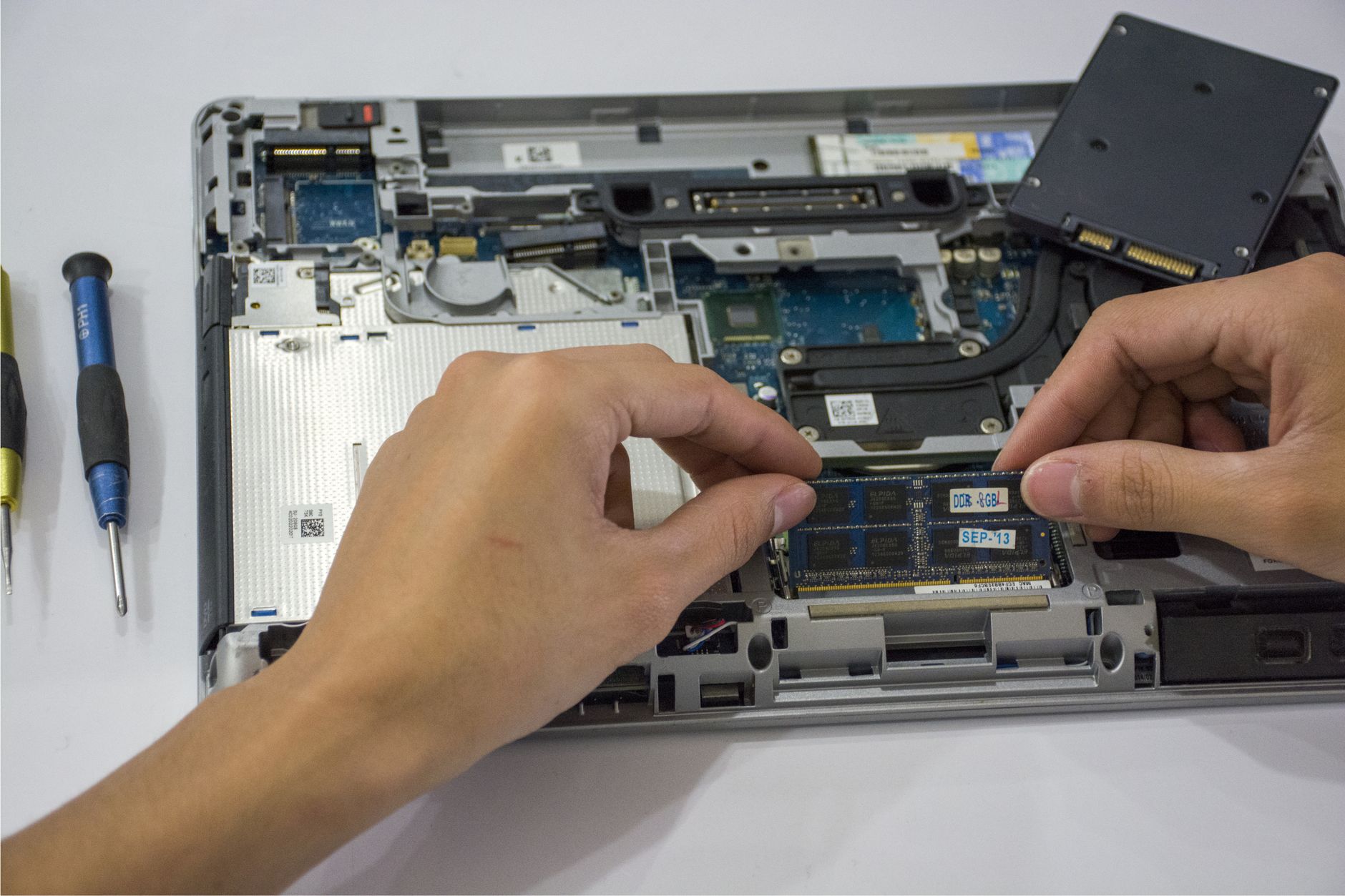
Every machine is opened up, cleaned, upgraded and tested inside and out, not just wiped.
What you can do about it
Buy refurbished (the highest-impact everyday choice)
The single most effective thing most people can do is simple: when you next need a computer, buy one that already exists. Our refurbished laptops are business-grade machines given a proper second life, and if you want a hand choosing, our guide to choosing a refurbished laptop walks you through it. The greener option is also the cheaper one: our affordable refurbished laptops from $249 prove the two go hand in hand.
Recycle your old device responsibly
When a machine really has reached the end, don’t bin it. Most local councils either run or list an e-waste drop-off point or a refuse station that accepts old electronics, so check your local council website for the nearest one. Reuse first, recycle second, landfill never.
Working machines, properly renewed. 48-hour QA tested, warranty and NZ tech support included. Renewed laptops from $249.
Browse our refurbished rangeFrequently asked questions
Is refurbished really better for the environment than recycling?+
How much e-waste does New Zealand actually produce?+
Are refurbished laptops worth it?+
Do renewed laptops come with a warranty?+
Sources
- Global E-waste Monitor 2024, ITU and UNITAR (New Zealand country data and global figures). globalewaste.org
- Ministry for the Environment, New Zealand: product stewardship and priority products. environment.govt.nz
- Dell Latitude Product Carbon Footprint studies (manufacturing share of lifecycle emissions). dell.com
- Apple MacBook Air Product Environmental Reports (manufacturing share of lifecycle emissions). apple.com